
Guide to Design Phases in Architecture: SD, DD, CD, and Beyond
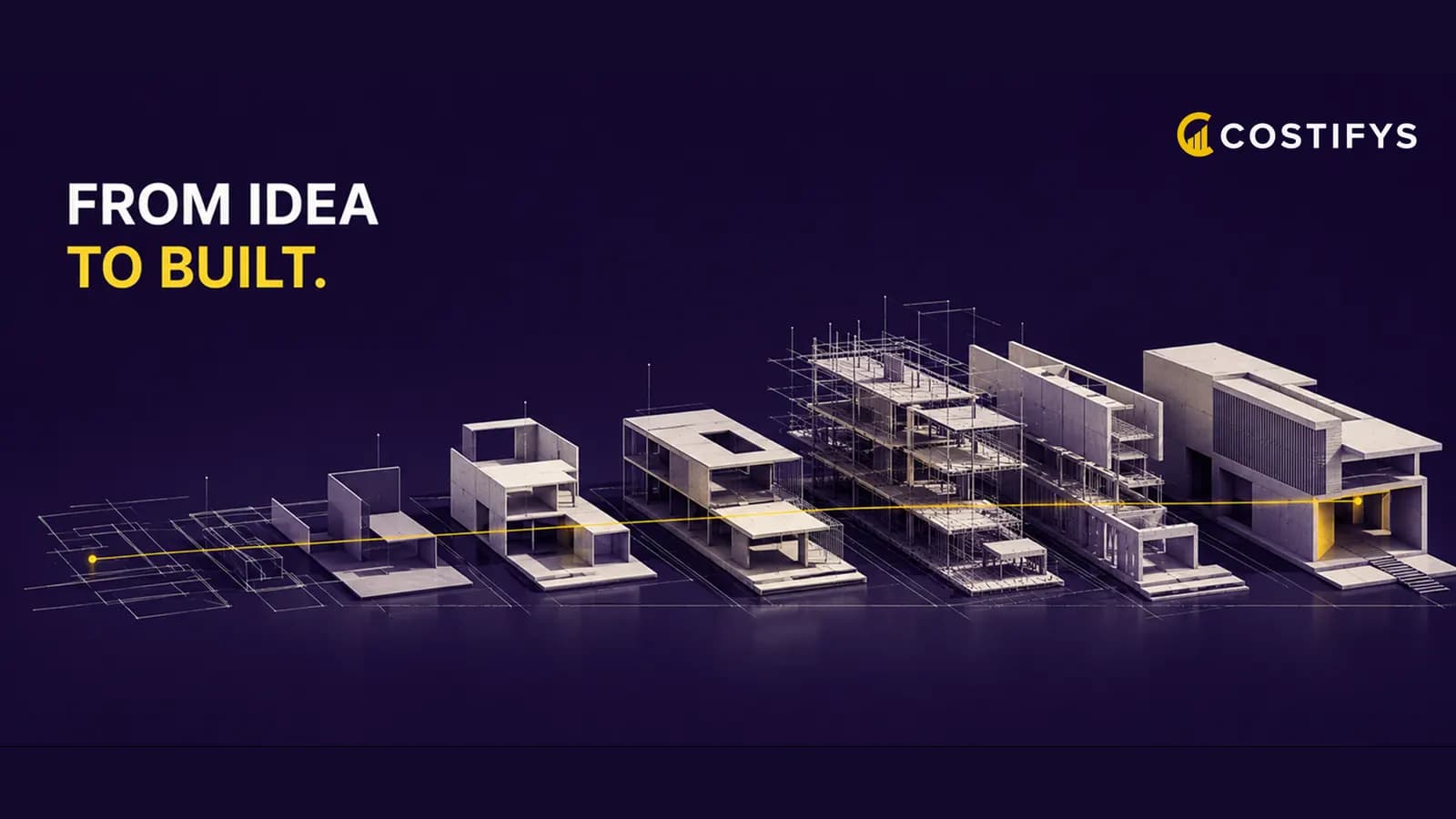
Every architecture project follows a structured sequence of design phases. These phases organize the work, define deliverables, and establish when decisions need to be made. Understanding them is essential for architects, clients, and anyone involved in the building process.
This guide covers all five standard AIA design phases, plus pre-design. You will learn what happens in each phase, how fees are typically split, what deliverables to expect, and practical tips for success.
Overview of the Architecture Design Phases
The American Institute of Architects (AIA) defines five standard phases for architecture services. Most architecture contracts in the United States follow this structure:
- Phase 0: Pre-Design / Programming (often a separate contract)
- Phase 1: Schematic Design (SD)
- Phase 2: Design Development (DD)
- Phase 3: Construction Documents (CD)
- Phase 4: Bidding and Negotiation
- Phase 5: Construction Administration (CA)
Each phase builds on the previous one. Decisions are progressively locked in as you move forward. The cost of making changes increases dramatically with each phase. A change during SD might cost nothing. The same change during CD might cost thousands in redesign time.
Typical Fee Split Across Phases
The AIA recommends this approximate fee distribution:
- Schematic Design: 15% of total fee
- Design Development: 20% of total fee
- Construction Documents: 40% of total fee
- Bidding/Negotiation: 5% of total fee
- Construction Administration: 20% of total fee
These percentages vary by project type and firm. Firms that do heavy 3D modeling in SD may allocate more to early phases. Firms that provide extensive CA services may allocate 25% or more to that phase. The key is that CD always takes the largest share because it requires the most detailed documentation.
Phase 0: Pre-Design and Programming
Pre-design happens before the formal design phases begin. It is often a separate contract because it defines the project scope that the design phases will address.
What happens:
- Needs assessment and stakeholder interviews
- Space programming (listing every room and its requirements)
- Site selection or evaluation
- Feasibility studies and pro forma analysis
- Code and zoning research
- Budget development
Duration: 2-12 weeks depending on project complexity
Key deliverable: A written program document defining the project scope, budget, and schedule
Phase 1: Schematic Design (SD)
SD is where the big design ideas take shape. The architect explores options and establishes the overall concept.
What happens:
- Site analysis and design response
- Development of 2-3 conceptual options
- Client presentations and feedback sessions
- Selection and refinement of preferred concept
- Preliminary structural and MEP input from consultants
- Preliminary cost estimate
Deliverables: Site plan, floor plans, sections, elevations, 3D views, area summary, preliminary cost estimate
Duration: 4-16 weeks
Fee: 15% of total
Tip: Make big decisions during SD. Changing the building orientation in SD costs almost nothing. Changing it during CD could cost tens of thousands.
Phase 2: Design Development (DD)
DD takes the approved SD concept and develops it in greater detail. Materials, systems, and dimensions are defined.
What happens:
- Detailed floor plans with dimensions and room labels
- Wall types, ceiling heights, and floor finishes defined
- Structural system designed
- Mechanical, electrical, and plumbing systems laid out
- Exterior materials and details selected
- Interior finish selections begin
- Updated cost estimate
Deliverables: Detailed plans, sections, elevations, wall sections, material selections, outline specifications, updated cost estimate
Duration: 4-16 weeks
Fee: 20% of total
Tip: DD is your last chance to make significant changes without major cost impact. Lock in all major design decisions before moving to CD.
Phase 3: Construction Documents (CD)
CD is the most labor-intensive phase. The design is translated into detailed drawings and specifications that contractors use to build the project.
What happens:
- Complete dimensioned drawings for every building system
- Written specifications for materials, products, and installation methods
- Coordination between architecture, structural, MEP, civil, and landscape drawings
- Code compliance documentation
- Permit submission preparation
- Final cost estimate
Deliverables: Full construction drawing set, project manual with specifications, code compliance documentation
Duration: 8-24 weeks
Fee: 40% of total
Tip: Quality control is critical during CD. Establish drawing review checkpoints at 50%, 75%, and 95% completion. Catching errors in-house is far cheaper than addressing them in the field.
Phase 4: Bidding and Negotiation
The architect helps the owner select a contractor through a competitive bid or negotiated process.
What happens:
- Preparation of bid packages and instructions
- Distribution of documents to bidders or negotiating contractors
- Answering contractor questions via addenda
- Bid evaluation and recommendation
- Contract negotiation support
Duration: 3-8 weeks
Fee: 5% of total
Tip: Hold a pre-bid meeting at the site. Contractors who see the site conditions firsthand submit more accurate bids.
Phase 5: Construction Administration (CA)
CA runs from groundbreaking through project completion. The architect monitors construction to ensure the building is built according to the design.
What happens:
- Regular site visits and observation reports
- Submittal and shop drawing review
- Responding to Requests for Information (RFIs)
- Review and processing of change orders
- Payment application review
- Punch list preparation and final inspection
Duration: Matches construction schedule (6-24+ months)
Fee: 20% of total
Tip: CA is where many firms lose money. Track your hours carefully. RFI volume and change order frequency are the biggest drivers of CA scope creep. Set clear expectations with the owner about what is included in basic services versus additional services.
Managing Fees Across All Phases
The biggest financial risk for architecture firms is spending too much fee in early phases, leaving too little for CD and CA. Industry data shows that 40% of firms exceed their budgeted hours during construction documents. The problem usually starts earlier: scope creep during SD and DD consumes fee that was earmarked for later phases.
Tracking your actual hours against budgeted hours at every phase transition is essential. If you have used 20% of your fee during SD (instead of the budgeted 15%), you know you need to be more efficient in DD to stay on track.
This is exactly what Costifys is built for. The platform lets you set phase-level budgets, track time in real time, and see your fee consumption at a glance. You always know where you stand and can make adjustments before small overruns become big problems. Try it free and see the difference real-time phase tracking makes.
Sources
- Phase definitions (SD, DD, CD, Bidding, CA) follow the standard sequence set out in The American Institute of Architects Document B101, the industry's baseline owner-architect agreement.
- UK and Commonwealth practices should map these against the RIBA Plan of Work stages published by the Royal Institute of British Architects.
Written by the Costifys editorial team
Costifys publishes practice-management research for architecture and engineering firms. Articles are written and reviewed in-house against our editorial policy, which covers how we source figures, when we update articles, and how we handle claims about our own product.
Let AI handle the boring parts of running your firm
AI Budget Builder, AI Staffing picks, and AI meeting notes free your team from admin so you can focus on design.
Get weekly A&E firm insights
Budgeting tips, utilization benchmarks, and product updates. No spam.