
How to Calculate Budget at Completion (BAC) for Architecture Projects
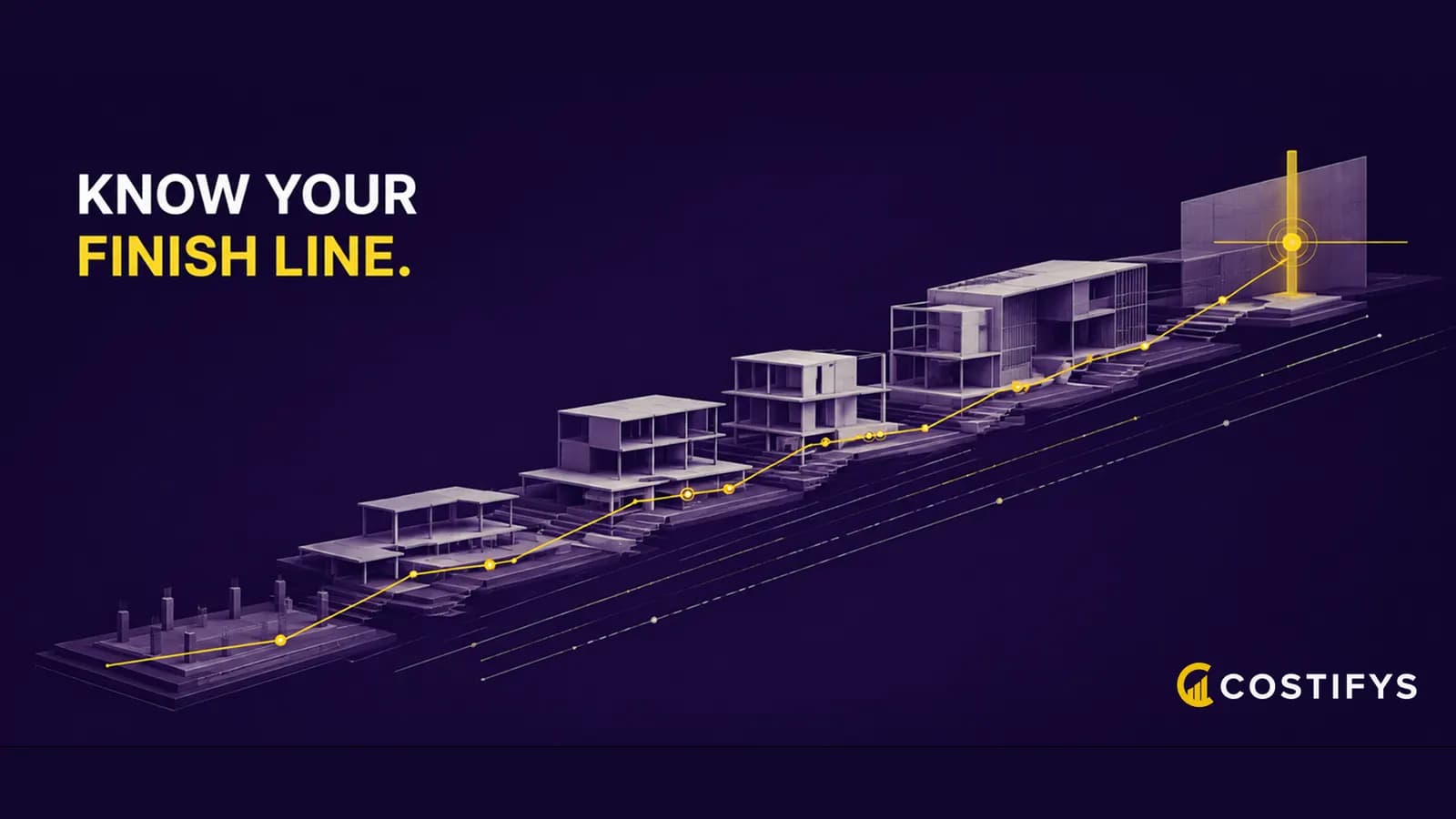
Budget at Completion, or BAC, is one of the most important numbers in project management. It tells you the total planned budget for your project from start to finish. For architecture and engineering firms, knowing your BAC is the foundation for every financial decision you make during a project.
This guide walks you through the BAC formula, shows you how to calculate it step by step, and explains how it fits into earned value management (EVM). You will also learn how to use BAC alongside other EVM metrics to catch budget problems early.
What Is Budget at Completion (BAC)?
BAC represents the total authorized budget for a project. It is the sum of all planned costs across every phase and task. Think of it as your project's financial finish line. It answers one simple question: how much should this project cost when it is done?
BAC is not a guess or an estimate made on the fly. It comes from detailed planning during the proposal and budgeting phase. For architecture projects, BAC typically includes:
- Labor costs: Hours multiplied by billing rates for every team member, across all project phases
- Consultant fees: Structural, MEP, civil, landscape, and other sub-consultant budgets
- Reimbursable expenses: Travel, printing, model-making, permit fees, and other direct costs
- Contingency: A buffer (typically 5-10%) for unforeseen scope adjustments
- Overhead allocation: The firm's indirect costs allocated to the project
The BAC Formula
The formula is straightforward:
BAC = Sum of all budgeted costs for the project
In practice, you build BAC from the bottom up. Start with individual tasks, roll them up into phases, and total everything. Here is a simplified example for an architecture project:
Step-by-Step BAC Calculation Example
Let us walk through a real-world example. Your firm wins a $500,000 fee for a mixed-use building project. You need to calculate the BAC by breaking the fee into phases.
Step 1: Define the phases and fee allocation
- Schematic Design (SD): 15% of fee = $75,000
- Design Development (DD): 20% of fee = $100,000
- Construction Documents (CD): 40% of fee = $200,000
- Bidding and Negotiation: 5% of fee = $25,000
- Construction Administration (CA): 20% of fee = $100,000
Step 2: Break each phase into labor categories
For the SD phase ($75,000):
- Principal: 40 hours at $250/hr = $10,000
- Project Manager: 80 hours at $175/hr = $14,000
- Project Architect: 120 hours at $150/hr = $18,000
- Designer: 160 hours at $125/hr = $20,000
- Intern: 80 hours at $85/hr = $6,800
- Expenses and contingency: $6,200
Step 3: Repeat for all phases and total them
After completing this exercise for every phase, your BAC is the grand total: $500,000. This number becomes your baseline for tracking performance throughout the project.
How BAC Fits into Earned Value Management
BAC is the starting point for earned value management. EVM is a method that compares planned progress against actual progress and actual costs. It uses three core measurements:
- Planned Value (PV): How much work should be done by now, in dollar terms
- Earned Value (EV): How much work is actually done by now, in dollar terms
- Actual Cost (AC): How much money has actually been spent by now
BAC connects to these metrics through several important formulas:
Key EVM Formulas That Use BAC
Cost Performance Index (CPI)
CPI = EV / AC
If CPI is less than 1.0, you are over budget. If CPI is greater than 1.0, you are under budget. This is your efficiency metric.
Schedule Performance Index (SPI)
SPI = EV / PV
If SPI is less than 1.0, you are behind schedule. If SPI is greater than 1.0, you are ahead of schedule.
Estimate at Completion (EAC)
EAC = BAC / CPI
This formula predicts what the project will actually cost based on current performance. If your BAC is $500,000 and your CPI is 0.85, your EAC is $588,235. You are on track to overspend by $88,235.
Variance at Completion (VAC)
VAC = BAC - EAC
This tells you the expected budget overrun or underrun. A negative VAC means you will exceed your budget.
To-Complete Performance Index (TCPI)
TCPI = (BAC - EV) / (BAC - AC)
This tells you how efficiently you must perform on the remaining work to finish on budget. A TCPI above 1.0 means you need to improve efficiency.
Common BAC Mistakes in Architecture Projects
Architecture firms often make these errors when setting their BAC:
- Excluding scope creep buffer: Not building contingency into the original budget. When scope creeps, there is no room to absorb it.
- Underestimating CA hours: Construction administration almost always takes more time than planned. Budget 20-25% of fee, not 15%.
- Ignoring consultant coordination: The hours your team spends managing sub-consultants are real costs. Include them.
- Using flat rates instead of phase-specific rates: Senior staff are more involved in early phases. Use actual role-by-phase staffing plans.
- Not updating BAC when scope changes: When an approved change order increases scope, your BAC must increase too. Otherwise your CPI will always look bad.
Best Practices for Managing BAC
Follow these tips to keep your BAC accurate and useful throughout your project:
- Build BAC from a detailed staffing plan. Top-down percentages are fine for proposals. But once you win the project, create a bottom-up budget with specific hours by role and phase.
- Review BAC at every phase gate. Before starting DD, review your SD actuals and adjust the remaining budget if needed.
- Track EVM metrics weekly. CPI and SPI are only useful if you calculate them regularly. Monthly is the minimum. Weekly is better.
- Separate base scope from additional services. Keep your core BAC clean. Track additional service budgets separately so you can see true project performance.
- Use software to automate calculations. Manual EVM tracking in spreadsheets is error-prone and time-consuming. Dedicated project management tools calculate these metrics automatically.
Platforms like Costifys make BAC tracking effortless. You set your project budget by phase, log time against it, and the software calculates your CPI, SPI, EAC, and VAC in real time. No spreadsheets, no formulas, no guesswork.
When to Revise Your BAC
Your BAC should change only when the project scope formally changes. This means approved change orders, contract amendments, or authorized additional services. Do not change BAC just because you are running over budget. That defeats the purpose. BAC is your baseline. Changing it to match actuals hides performance problems instead of revealing them.
The exception is a formal re-baseline. If the project scope changes so dramatically that the original BAC is no longer meaningful, a re-baseline creates a new reference point. Document the reason for the change and maintain a record of both the original and revised BAC.
Understanding BAC and EVM gives your firm a powerful early warning system for project finances. Start tracking these metrics on your next project and you will catch budget issues weeks before they become crises. Try Costifys free to see how automated budget tracking works in practice.
Written by the Costifys editorial team
Costifys publishes practice-management research for architecture and engineering firms. Articles are written and reviewed in-house against our editorial policy, which covers how we source figures, when we update articles, and how we handle claims about our own product.
Track every dollar with real-time budget dashboards
See budget vs. actuals by phase, flag overruns before they happen, and keep every project profitable.
Get weekly A&E firm insights
Budgeting tips, utilization benchmarks, and product updates. No spam.