
Brutalist Buildings: 30 Iconic Examples Around the World
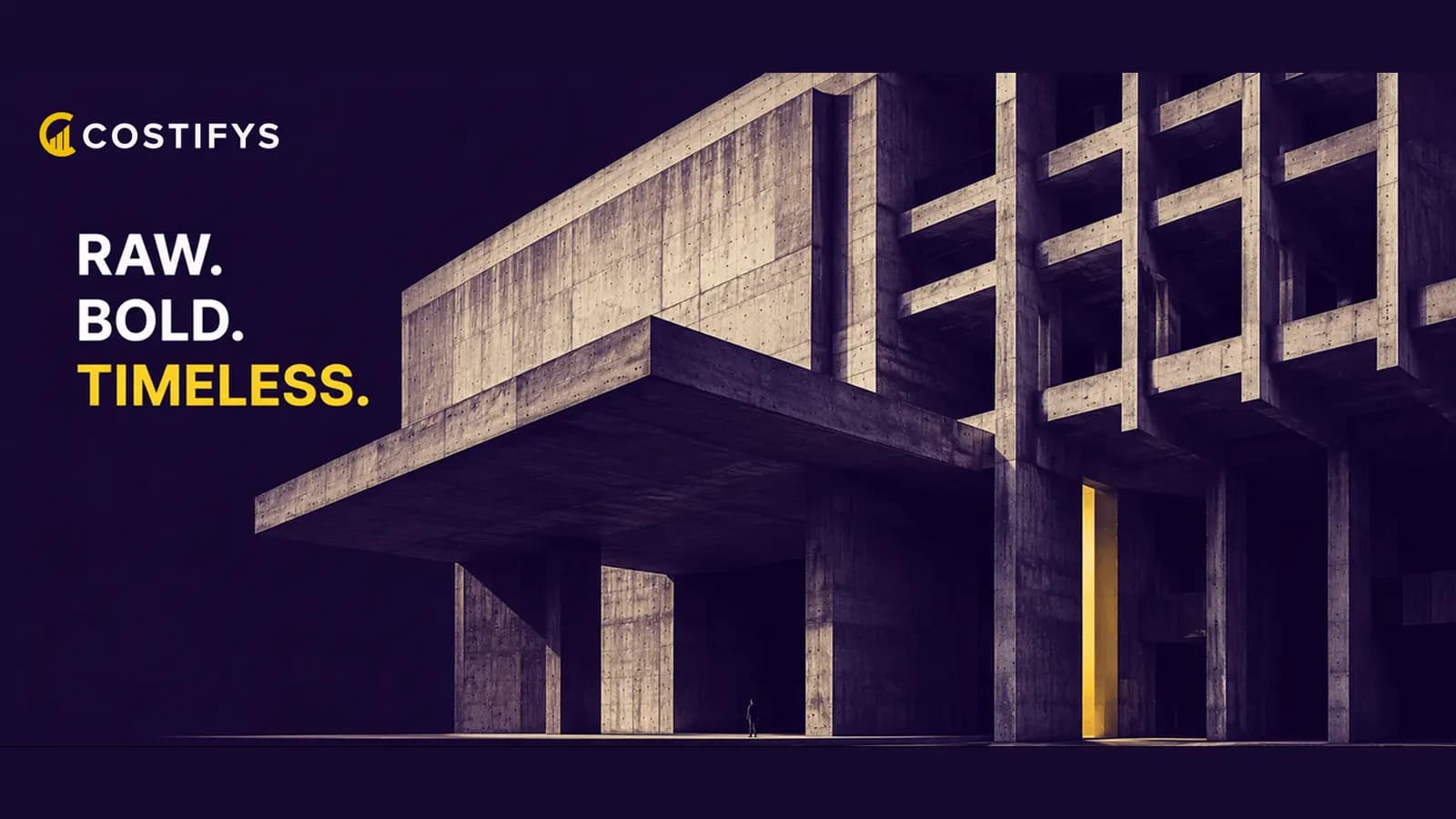
Brutalist buildings are bold, raw, and impossible to ignore. They divide opinion like no other style in architecture. Some people see them as concrete eyesores. Others view them as honest, powerful expressions of form and material. Regardless of where you stand, brutalist buildings have shaped cities around the globe. They deserve a closer look.
This guide covers 30 of the most iconic brutalist buildings from six continents. You will learn what makes each one significant and why the style still matters to architects in 2026.
What Makes a Building Brutalist?
Before we explore the list, let us define the style. Brutalism takes its name from the French term "beton brut," meaning raw concrete. The movement emerged in the 1950s and peaked in the 1970s. It shares a few core traits:
- Exposed concrete: The primary material is left unfinished. You see the texture of the formwork on the surface.
- Massive forms: Buildings are heavy and monumental. They express their structural systems honestly.
- Geometric repetition: Modular units, grid patterns, and repeating shapes define the facades.
- Functional honesty: The purpose of each part of the building is visible from the outside. Nothing is hidden behind decorative cladding.
- Social ambition: Many brutalist buildings were public housing, civic buildings, or universities. They aimed to serve the people.
Europe: The Birthplace of Brutalism
Europe produced the largest concentration of brutalist landmarks. Here are 12 standout examples.
1. Barbican Centre, London, UK (1982) - Chamberlin, Powell and Bon designed this massive arts and residential complex. It holds concert halls, galleries, a library, and over 2,000 apartments. The layered concrete terraces and elevated walkways define the London skyline.
2. Trellick Tower, London, UK (1972) - Erno Goldfinger created this 31-story residential tower in North Kensington. Its separate service tower connected by sky bridges became an icon of social housing design.
3. Unite d'Habitation, Marseille, France (1952) - Le Corbusier built what many consider the first brutalist building. This "vertical city" holds 337 apartments, a hotel, shops, and a rooftop gymnasium. It defined the idea of beton brut.
4. National Theatre, London, UK (1976) - Denys Lasdun designed this layered concrete composition on the South Bank of the Thames. Its horizontal terraces step down toward the river. Prince Charles once called it "a clever way of building a nuclear power station in the middle of London."
5. Habitat 67, Montreal, Canada (1967) - Moshe Safdie stacked 354 prefabricated concrete boxes into 158 apartments for Expo 67. Each unit has a private terrace formed by the roof of the unit below. It remains one of the most photographed buildings in North America.
6. Robin Hood Gardens, London, UK (1972) - Alison and Peter Smithson designed this social housing estate in East London. Though demolished in 2017, a section was preserved at the Victoria and Albert Museum. It represents brutalism's idealism and its controversial legacy.
7. Wotruba Church, Vienna, Austria (1976) - Fritz Wotruba designed this church from 152 concrete blocks stacked at irregular angles. It looks like abstract sculpture more than traditional architecture.
8. Torres Blancas, Madrid, Spain (1969) - Francisco Javier Saenz de Oiza created this cylindrical tower with organic, tree-like balconies. It proves brutalism can be curvilinear and expressive.
9. Buzludzha Monument, Bulgaria (1981) - This flying-saucer-shaped Communist meeting hall sits on a mountaintop in the Balkans. Its dramatic form and remote location make it one of the most striking abandoned buildings on Earth.
10. Genex Tower, Belgrade, Serbia (1977) - Mihajlo Mitrovic designed this twin tower connected by a sky bridge. At 35 stories, it dominates the Belgrade skyline as a symbol of Yugoslav modernism.
11. Balfron Tower, London, UK (1967) - Another Erno Goldfinger design, this 27-story tower in Poplar preceded Trellick Tower. It served as the prototype for his connected service tower concept.
12. Church of Sainte-Bernadette du Banlay, Nevers, France (1966) - Claude Parent and Paul Virilio designed this bunker-like church with no windows on the exterior. Light enters only through hidden skylights. It challenges every assumption about what a church should look like.
The Americas: Bold Public Buildings
North and South America embraced brutalism for government, educational, and cultural buildings.
13. Boston City Hall, USA (1968) - Kallmann, McKinnell and Knowles won a competition with this inverted pyramid design. It is one of the most debated buildings in America. Supporters praise its civic honesty. Critics have tried for decades to demolish it.
14. Salk Institute, La Jolla, USA (1965) - Louis Kahn designed this research campus overlooking the Pacific Ocean. Two rows of concrete laboratory buildings frame a central courtyard with a narrow water channel pointing toward the horizon. Many architects call it the most beautiful brutalist building ever built.
15. Breuer Building (Whitney Museum), New York, USA (1966) - Marcel Breuer created this inverted ziggurat on Madison Avenue. Its cantilevered upper floors and granite-faced concrete facade make it instantly recognizable. It now houses the Frick Collection.
16. National Congress, Brasilia, Brazil (1960) - Oscar Niemeyer designed twin towers flanked by a dome and a bowl-shaped structure for Brazil's new capital. While often classified as modernist, the raw concrete and monumental scale align with brutalist principles.
17. BANKUNITED Center (formerly Miami Marine Stadium), USA (1963) - Hilario Candela designed this concrete grandstand over Biscayne Bay. Its massive folded-plate roof cantilevering 90 feet over the seating is a structural feat. After years of abandonment, restoration efforts are ongoing.
18. Pirelli Building, Sao Paulo, Brazil (1979) - This headquarters building features a massive exposed concrete facade with deep window recesses. It demonstrates how brutalism adapted to tropical climates with sun shading built into the structure.
Asia and Africa: Government and Cultural Icons
Brutalism spread globally as newly independent nations used the style for state buildings.
19. National Assembly, Dhaka, Bangladesh (1982) - Louis Kahn spent over 20 years designing this parliamentary complex. Massive geometric openings cut through concrete walls create dramatic light and shadow. It is considered Kahn's masterwork.
20. Chandigarh Capitol Complex, India (1953-1963) - Le Corbusier designed an entire government district for the new capital of Punjab. The High Court, Secretariat, and Legislative Assembly are all landmark brutalist works. The complex is now a UNESCO World Heritage Site.
21. Bank of Georgia Headquarters, Tbilisi, Georgia (1975) - George Chakhava designed this building as interlocking horizontal blocks stacked at right angles. It looks like a game of Jenga frozen in concrete.
22. Hall of Nations, New Delhi, India (1972) - Raj Rewal and Mahendra Raj created this exhibition hall with one of the largest concrete space frames ever built. Despite international protests, it was demolished in 2017.
23. KNUST Library, Kumasi, Ghana (1960s) - James Cubitt and Partners designed this university library with deep concrete brise-soleil that manage tropical sunlight. It shows how brutalism adapted to African climates.
24. Elijah Barayi House, Johannesburg, South Africa (2019) - Although recent, this civic building draws on brutalist principles with its raw concrete form and monumental presence.
Australia and Beyond: Late-Period Masterpieces
25. Sydney Sirius Building, Australia (1980) - Tao Gofers designed these stacked concrete apartments overlooking Sydney Harbor. After a long preservation battle, the building was saved from demolition and converted to luxury apartments.
26. Geisel Library, UC San Diego, USA (1970) - William Pereira designed this spaceship-like library perched on concrete pillars. It appears in multiple films and became a symbol of the university.
27. AT&T Long Lines Building, New York, USA (1974) - John Carl Warnecke designed this windowless skyscraper in Lower Manhattan. It was built to withstand a nuclear blast and house telephone switching equipment.
28. Yale Art and Architecture Building, USA (1963) - Paul Rudolph designed this seven-story building with 36 different levels connected by ramps and stairs. The corrugated concrete surface was created by hammering the ridges of poured concrete.
29. Hayward Gallery, London, UK (1968) - Part of the South Bank Centre complex, this gallery features raw concrete surfaces, geometric skylights, and elevated walkways that have hosted major art exhibitions for over 50 years.
30. J. Edgar Hoover Building, Washington DC, USA (1975) - The FBI headquarters is one of the most prominent government brutalist buildings. Its fortress-like concrete facade and deep window recesses express both strength and function.
Why Architects Still Study Brutalist Buildings
Brutalism is experiencing a revival. Instagram accounts dedicated to concrete architecture have millions of followers. Architecture schools use brutalist buildings as case studies in honest material expression. Young architects admire the movement's ambition and its refusal to compromise.
There are practical reasons to study these buildings too. Brutalist structures teach lessons about structural clarity, climate-responsive design, and how to work with a single material at massive scale. For architects working on adaptive reuse projects, understanding brutalist construction methods is essential.
Whether you love them or hate them, brutalist buildings are part of our architectural heritage. They pushed boundaries, served communities, and proved that raw concrete can create spaces of extraordinary power and beauty.
Managing the complex budgets and timelines of large-scale projects like these requires clear financial visibility. Tools like Costifys help architecture and engineering firms track project costs, monitor budgets, and keep complex builds on schedule.
Written by the Costifys editorial team
Costifys publishes practice-management research for architecture and engineering firms. Articles are written and reviewed in-house against our editorial policy, which covers how we source figures, when we update articles, and how we handle claims about our own product.
See which plan fits your firm
Published per-user pricing, a free 14-day trial, and no credit card to start.
Get weekly A&E firm insights
Budgeting tips, utilization benchmarks, and product updates. No spam.