
Guide to Brutalism and Brutalist Architecture
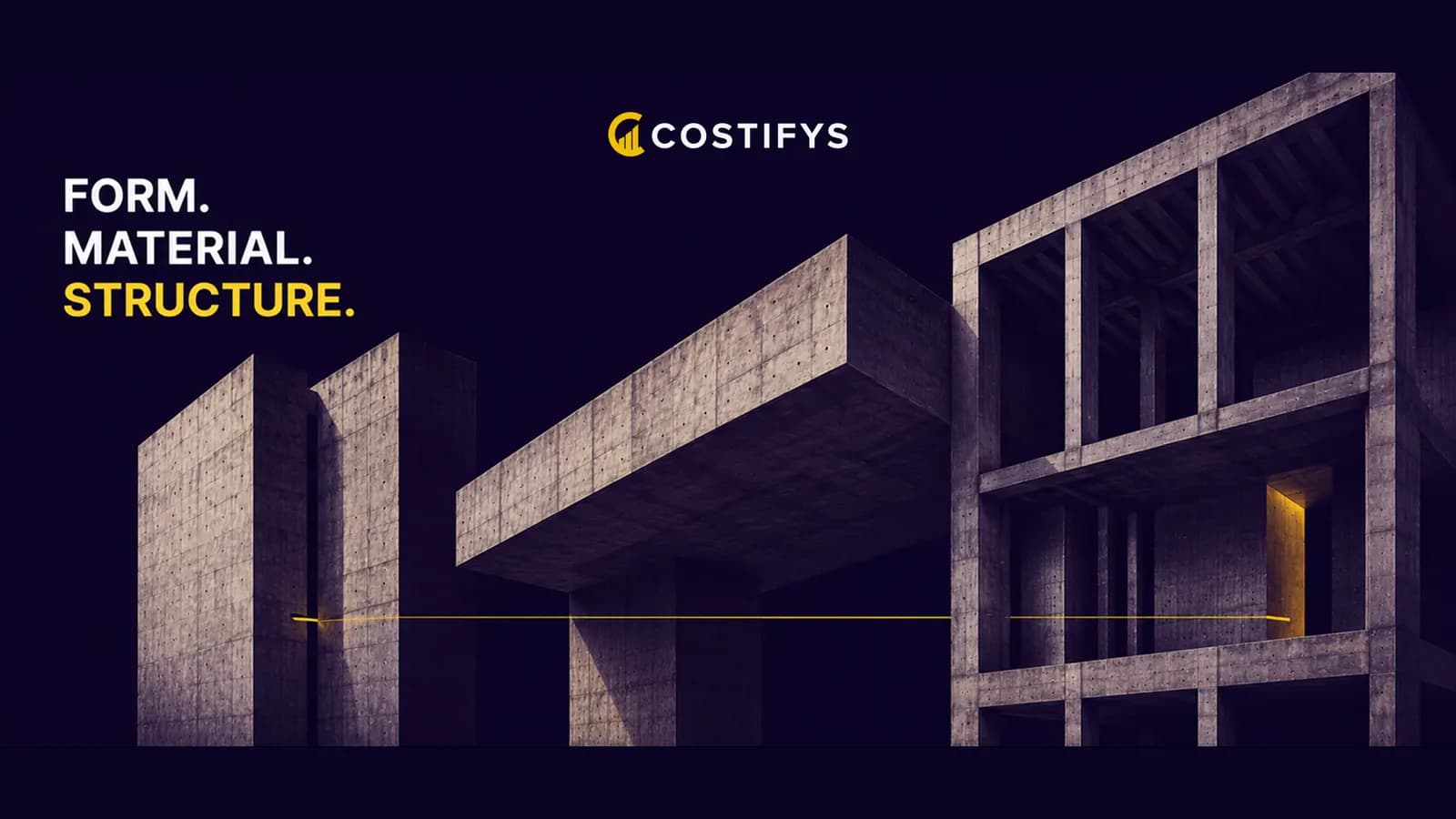
Brutalism is one of the most polarizing movements in architecture. Its massive concrete forms inspire deep admiration in some and fierce dislike in others. But love it or hate it, brutalism shaped cities around the world and continues to influence architects today.
This guide gives you everything you need to understand brutalist architecture: its origins, core principles, key figures, landmark buildings, and its surprising comeback in the 2020s.
What Is Brutalism?
Brutalism is an architectural style that emerged in the 1950s and dominated public architecture through the mid-1970s. The name comes from "beton brut," a French term meaning "raw concrete." Le Corbusier used the phrase to describe the unfinished concrete surfaces of his Unite d'Habitation in Marseille, completed in 1952.
The British architectural critic Reyner Banham popularized the term in his 1955 essay "The New Brutalism." He connected the style to an ethical approach to building: honest materials, visible structure, and a rejection of decorative pretension.
Core Characteristics of Brutalist Architecture
You can identify brutalist buildings by these defining features:
- Raw concrete surfaces: Unfinished concrete is the signature material. You can see the grain of the timber formwork on the surface. The material is celebrated, not covered up.
- Monumental scale: Brutalist buildings are large and imposing. They dominate their surroundings with massive, heavy forms.
- Structural honesty: The building's structure is visible from the outside. Load-bearing walls, columns, and floor plates are expressed clearly.
- Geometric boldness: Sharp angles, cantilevered volumes, and repetitive geometric patterns define the facades.
- Functional expression: You can often tell what happens inside a brutalist building just by looking at the outside. Different functions are expressed as distinct volumes.
- Minimal decoration: There is no applied ornament. The texture of concrete, the pattern of windows, and the play of light and shadow provide all the visual interest.
A Brief History of Brutalism
The Origins: 1950s
Brutalism grew from post-war modernism. Europe needed to rebuild quickly and cheaply after World War II. Concrete was abundant, affordable, and could be formed into almost any shape. Architects saw an opportunity to create a new, honest architecture stripped of bourgeois decoration.
Le Corbusier's Unite d'Habitation (1952) and the Smithsons' Hunstanton School in Norfolk (1954) established the style's foundations. The Smithsons were particularly important in defining brutalism as an ethical position: architecture should be honest about its materials, its structure, and its purpose.
The Golden Age: 1960s-1970s
Brutalism exploded during the 1960s. Governments around the world adopted the style for public buildings, universities, social housing, and civic centers. The style fit the era's optimism about government's ability to improve society through design.
Key buildings from this period include the Barbican Centre in London, Boston City Hall, and the National Assembly in Dhaka. Architects like Paul Rudolph, Louis Kahn, Erno Goldfinger, and Tadao Ando pushed the style in new directions.
The Decline: 1980s-1990s
By the late 1970s, public opinion had turned against brutalism. Many social housing projects built in the style had failed their residents due to poor maintenance, not design flaws. Concrete stained and weathered badly in wet climates. The postmodern movement rejected brutalism's austerity in favor of color, ornament, and historical references.
Many brutalist buildings were demolished during this period. Others were neglected and fell into disrepair, reinforcing negative perceptions.
The Revival: 2010s-Present
Brutalism has made a remarkable comeback. Social media accounts like @brutgroup (with over 500,000 followers) celebrate concrete architecture. Conservation groups have won protection for major brutalist landmarks. Architecture schools use brutalist buildings as case studies.
The revival is driven by several factors. A new generation sees beauty in brutalism's honesty. Sustainability advocates value concrete's durability and thermal mass. And the current housing crisis has renewed interest in the social ambitions that originally motivated brutalist designers.
Key Architects of the Brutalist Movement
- Le Corbusier (1887-1965): The godfather of brutalism. His Unite d'Habitation defined beton brut. His later works at Chandigarh and the Carpenter Center at Harvard extended the vocabulary.
- Louis Kahn (1901-1974): Kahn's buildings are brutalism at its most poetic. The Salk Institute, Kimbell Art Museum, and National Assembly in Dhaka use concrete to create spaces of extraordinary light and silence.
- Alison and Peter Smithson (1928-1993, 1923-2003): The British couple defined the New Brutalism in theory and practice. Their Hunstanton School and Robin Hood Gardens were foundational works.
- Paul Rudolph (1918-1997): His Yale Art and Architecture Building is a brutalist masterpiece. Rudolph pushed concrete's sculptural possibilities further than almost anyone.
- Erno Goldfinger (1902-1987): The Hungarian-British architect designed Trellick Tower and Balfron Tower, two of London's most iconic brutalist residential buildings.
- Tadao Ando (born 1941): The self-taught Japanese architect carries brutalism's spirit into the present. His churches and museums use smooth concrete and precise geometry to create meditative spaces.
Brutalism Beyond Concrete
While concrete is the signature material, brutalism is really about an approach, not a material. Some brutalist buildings use brick, steel, or stone in equally raw and honest ways. The Smithsons' Economist Building in London uses Portland stone. Marcel Breuer's buildings often combine concrete with stone cladding.
What unites all brutalist work is the commitment to material honesty, structural expression, and bold geometric form. The material can change. The attitude remains the same.
The Controversy: Why People Hate (and Love) Brutalism
No architectural style generates stronger opinions. Critics argue that brutalist buildings are:
- Cold, inhuman, and oppressive
- Ugly and out of place in historic neighborhoods
- Prone to staining, weathering, and looking dirty
- Associated with failed social housing projects
- Difficult and expensive to maintain
Supporters counter that brutalist buildings are:
- Honest and authentic in their use of materials
- Bold and memorable in a way sanitized modern buildings are not
- Durable when properly maintained (concrete lasts centuries)
- Products of genuine social ambition and democratic ideals
- Rich in texture, light, and spatial drama
The truth is that brutalism's quality varies enormously. The best brutalist buildings, by Kahn, Le Corbusier, and Ando, are among the finest works of architecture ever produced. The worst are poorly maintained housing blocks that were under-funded from the start.
Brutalism's Legacy Today
Brutalism's influence is visible in contemporary architecture. Firms like Herzog and de Meuron, Zaha Hadid Architects, and Grafton Architects draw on brutalist principles. The emphasis on honest materials, structural expression, and bold form persists even when the materials are timber, steel, or glass instead of concrete.
For architects managing complex projects inspired by these bold design traditions, financial clarity is essential. Understanding project costs at every phase ensures ambitious designs stay on budget. Tools like Costifys provide that visibility, from schematic design through construction administration.
Written by the Costifys editorial team
Costifys publishes practice-management research for architecture and engineering firms. Articles are written and reviewed in-house against our editorial policy, which covers how we source figures, when we update articles, and how we handle claims about our own product.
See which plan fits your firm
Published per-user pricing, a free 14-day trial, and no credit card to start.
Get weekly A&E firm insights
Budgeting tips, utilization benchmarks, and product updates. No spam.